Ugamatv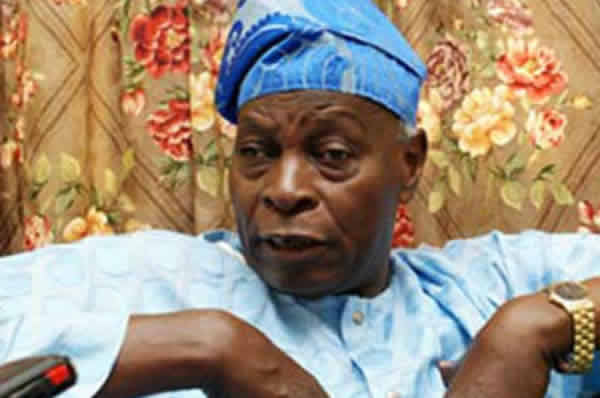
Former Secretary to the Government of the Federation and 1999 presidential candidate, Chief Olu Falae, has claimed that he—not Olusegun Obasanjo—won the pivotal election that marked Nigeria’s return to civilian rule.
Speaking during a special Democracy Day edition of Arise TV’s Morning Show on Thursday, the elder statesman alleged that the official results of the 1999 presidential election were manipulated, and that he was the rightful winner.
According to Falae, his legal counsel at the time, the late Chief J.O.K. Ajayi, conducted a thorough review of the announced results and concluded that Falae defeated Obasanjo by over one million votes.
“I was informed by Chief J.O.K. Ajayi that after scrutinizing the figures, I actually won the election by more than a million votes,” he said. “But we chose not to go to court because our priority was to ensure a peaceful transition to democracy after years under military rule.”
Falae’s statement revisits a contentious chapter in Nigeria’s political history—the transitional period following the death of military ruler General Sani Abacha and the interim leadership of General Abdulsalami Abubakar, who facilitated the 1999 elections.
At the time, the election was seen as a compromise effort to unify the country, particularly in the wake of the annulled June 12, 1993, election widely believed to have been won by MKO Abiola, a Yoruba man. Both Obasanjo and Falae, also Yoruba, were front-runners in the 1999 race—a move interpreted as a bid to appease the South-West.
Falae, who ran on a joint ticket of the Alliance for Democracy (AD) and the All Peoples Party (APP), went up against Obasanjo, the candidate of the ruling-class-backed Peoples Democratic Party (PDP). Despite suspicions surrounding the results, the election was upheld as a necessary step toward democratic restoration.
“There was tremendous pressure to let things be for the sake of national unity,” Falae revealed. “We made sacrifices. I accepted the result in good faith at the time. But the truth is, I won that election.”
He emphasized that his motive in speaking out now is not personal vindication but a desire to set the historical record straight.
“It’s not about me. It’s about telling Nigerians the truth. They deserve to know the real story behind our so-called democratic rebirth.”
Reflecting on Nigeria’s democratic journey since then, Falae lamented that the country has yet to conduct a truly credible election since 1993, despite the continuity of civilian governance.

 Precious Chukwuwa