Ugamatv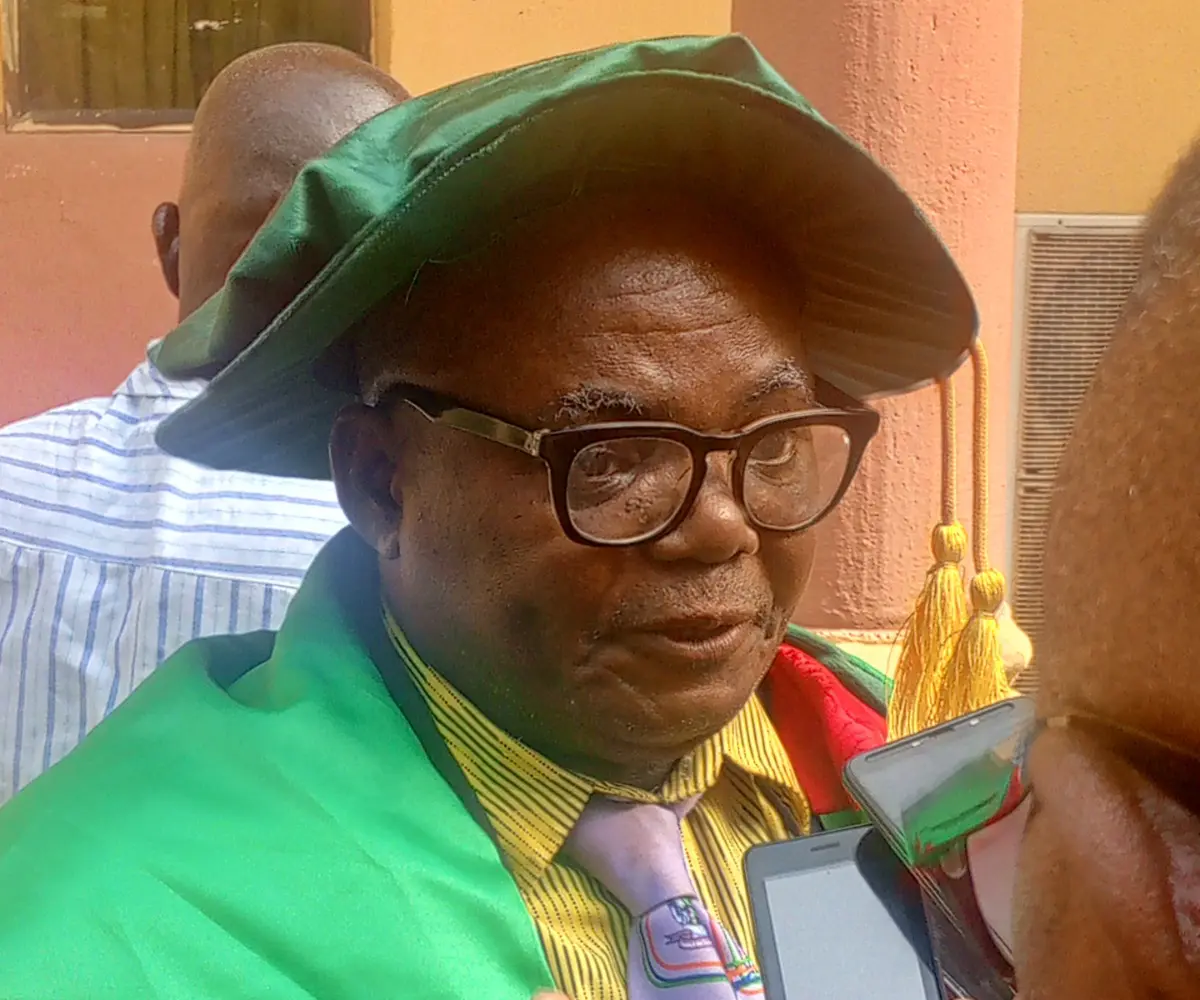
A renowned Professor of Banking and Finance, Professor Sebastian Uremadu, has called on the Central Bank of Nigeria (CBN) to urgently review its high interest rate policies, warning that they could further worsen Nigeria’s economic challenges.
Delivering the 60th Inaugural Lecture at Michael Okpara University of Agriculture, Umudike, Abia State, on Wednesday, Uremadu criticized the apex bank’s tight monetary policies, particularly the elevated interest rates which he said make it difficult for businesses and individual investors to access credit or repay existing loans. This, he noted, has negatively impacted investor confidence in Nigeria’s economic landscape.
He also expressed strong disapproval of the CBN’s policy that requires commercial banks to hold 50% of customer deposits with the central bank, stating that it severely limits the funds available for lending and investment, and hinders banks from meeting customer demands.
“How can banks lend to investors or fund economic growth when half of their deposits are tied down with the CBN?” Uremadu queried. “With some of the highest interest rates globally, it’s no surprise investors are being driven away.”
The professor linked the current economic hardship, including the rising cost of living, to a combination of the CBN’s monetary policies and the removal of fuel subsidies. According to him, these actions have significantly contributed to the country’s inflation and economic instability.
Uremadu emphasized the importance of foreign direct investment (FDI) as a key driver of economic growth and capital formation. He urged policymakers to create a more conducive environment to attract both local and foreign investors.
He also called on the Federal Government to reduce reliance on foreign capital and instead invest more in critical sectors such as healthcare, education, and infrastructure to stimulate sustainable growth.
Finally, Uremadu questioned the accuracy of data from the National Bureau of Statistics (NBS), suggesting that official economic figures may not fully reflect the reality on ground, and pointed to issues like fiscal deficits, excessive money supply, volatile exchange rates, and inflation as major economic threats.

 Ifejika joyce
 Precious Chukwuwa