Ifejika joyce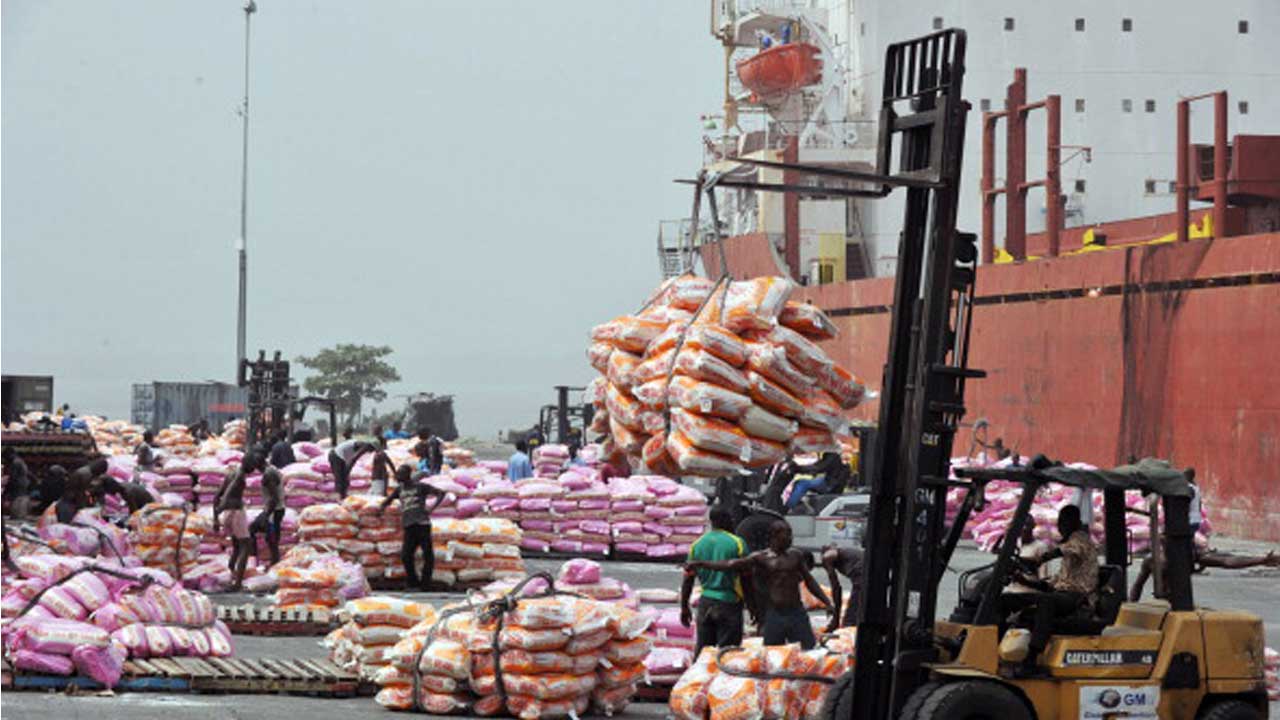
The Minister of Agriculture and Food Security, Sen. Abubakar Kyari, has revealed that Nigeria spends about $10 billion every year on food imports, including wheat, rice, sugar, fish, and even tomato paste.
Speaking at the First Bank of Nigeria Agric and Export Expo in Lagos, the minister—represented by his Special Adviser, Mr. Ibrahim Alkali—lamented the rising rate of agro-imports and stressed the urgent need for innovative financing to strengthen local agricultural production and exports.
Kyari noted that agriculture currently contributes 35% to Nigeria’s Gross Domestic Product and employs 35% of the workforce. Despite having 85 million hectares of arable land and a youth population of over 70% under the age of 30, Nigeria accounts for less than 0.5% of global exports and earns under $400 million annually from agro-exports.
“To build a strong non-oil export economy, we must rethink how we finance agriculture,” he said.
He reaffirmed the Tinubu administration’s commitment to achieving food sovereignty, explaining that Nigeria must be able to feed itself without excessive reliance on imports.
“Food sovereignty means ensuring that no Nigerian goes hungry due to shocks in the global food supply chain. Every community must thrive on the strength of our land, our people, and our productivity. Boosting domestic production and building support for exports are two sides of the same coin,” he said.
Kyari emphasised that Nigeria has the land, labour, and market potential, but lacks the systems of financing, value addition, and infrastructure needed to transform this potential into prosperity.
He called for a shift from dependence on oil to resilience in agriculture, moving from fragmented farmer credit schemes to structured financial systems that attract significant capital. He also highlighted the need to engage youth more actively in agribusiness and develop mechanisms that link agricultural goals with performance triggers.
“Nigeria can do better if we improve systems such as revenue sharing, forward contracts, and Pay-as-Harvest models. These are not abstract theories—they are already working in other economies,” Kyari added.


 Chidiogo asuke