Precious Chukwuwa
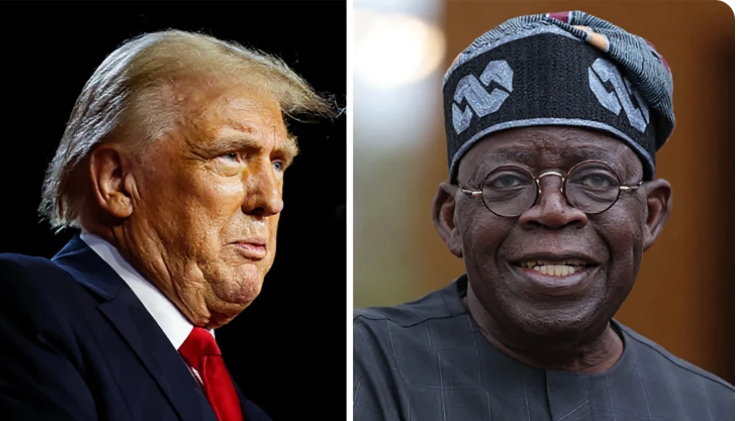
U.S. President Donald Trump has claimed that American military strikes in Nigeria helped prevent the mass killing of Christians by fighters linked to the Islamic State West Africa Province (ISWAP), pledging to sustain operations against terrorist groups in the country.
Speaking at an event in Washington on Friday, Trump defended his administration’s decision to authorise military action against ISWAP, saying the operations significantly reduced attacks on Christian communities.
“As you know, we recently struck Nigeria and largely ended the slaughter of great Christian populations,” Trump said, adding that thousands of men, women and children had been killed before the intervention.
The U.S. president said the strikes sent a strong warning to the militants, discouraging them from carrying out further attacks.
“They know that if they go further, the attack will be far greater and that they don’t want to really get involved anymore so much,” he said.
Trump also claimed that U.S. forces eliminated several senior terrorist commanders during the campaign, saying the military had taken out the group’s top three leaders.
Reaffirming his administration’s commitment to combating religious persecution, Trump said the United States would continue pursuing terrorist organisations wherever they operate, using what he described as “the greatest weapons on earth” to protect civilians.
His remarks come amid growing security cooperation between Washington and Abuja, with the United States increasing intelligence-sharing and military support for Nigerian security forces in the fight against ISWAP and other extremist groups.
Nigeria has battled insurgency for more than a decade, with Boko Haram, ISWAP and other armed groups responsible for thousands of deaths, mass displacement, kidnappings and attacks on communities, particularly in the North-East and parts of the North-West.
While Trump has repeatedly highlighted attacks on Christians in Nigeria, Nigerian authorities and independent security analysts maintain that both Christians and Muslims have been victims of insurgency, banditry, communal violence and other forms of insecurity.
Human rights organisations have also documented attacks on churches, mosques, religious leaders and civilian communities across different parts of the country, underscoring the broad impact of the conflict on Nigerians regardless of religious affiliation.


 Chidiogo asuke