Precious Chukwuwa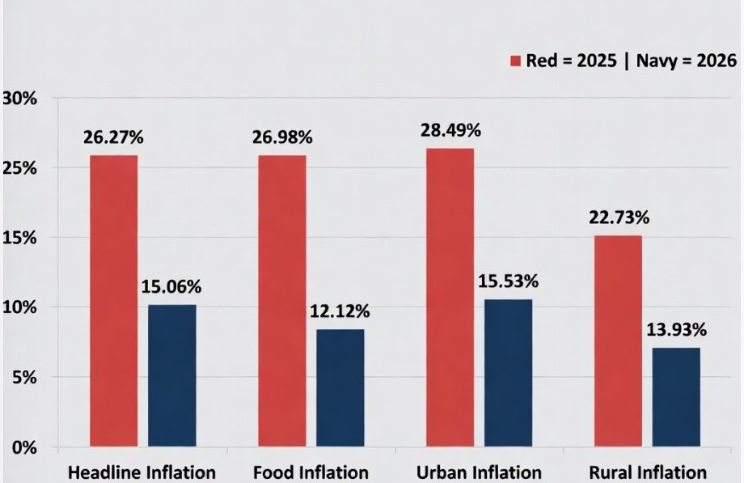
Nigeria’s inflation rate eased to 15.06 per cent in February 2026, down slightly from 15.10 per cent in January, as food prices also moderated, with food inflation falling to 12.12 per cent year-on-year—14.86 percentage points lower than February 2025’s 26.98 per cent.
On a month-to-month basis, headline inflation increased by 2.01 per cent in February 2026, higher by 4.89 percentage points compared to January’s -2.88 per cent. However, compared to February 2025, the year-on-year headline inflation rate was 11.21 percentage points lower than the 26.27 per cent recorded during the same period last year.
Urban inflation stood at 15.53 per cent year-on-year, down 12.96 percentage points from February 2025’s 28.49 per cent. Month-on-month, the urban rate rose by 2.55 per cent, up 5.27 percentage points from January’s -2.72 per cent. The twelve-month average urban inflation rate for February 2026 was 21.25 per cent, slightly higher than the 19.44 per cent reported in February 2025.
Rural inflation recorded 13.93 per cent year-on-year in February 2026, 8.80 percentage points lower than February 2025’s 22.73 per cent. Month-on-month, the rural inflation rate increased by 0.71 per cent, up 4.00 percentage points from January’s -3.29 per cent. The twelve-month average for rural inflation was 20.28 per cent, up 3.80 percentage points from 16.47 per cent in February 2025, according to the National Bureau of Statistics (NBS).
Food inflation contributed significantly to February’s CPI changes. While the year-on-year rate was 12.12 per cent, month-on-month food prices rose 4.69 per cent, up 10.70 percentage points from January’s -6.02 per cent. NBS attributed the increase to rising prices of staples and essentials such as beans, carrots, okazi leaf, cassava tuber, crayfish, millet flour, yam flour, snails, ogbono, and cowpeas.
The average annual food inflation for the twelve months ending February 2026 was 19.08 per cent, marking a sharp decline of 18.31 percentage points compared with February 2025’s 37.40 per cent.
This data indicates a gradual easing of inflation pressures in Nigeria, particularly in food prices, despite month-to-month increases.


 Chisom Orjiogbu