Ugamatv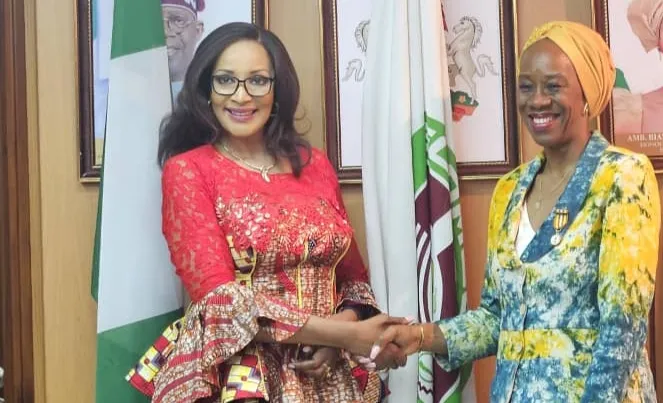
Nigeria is set to deepen its collaboration with the International Organisation for Migration (IOM) in tackling migration challenges, according to the Minister of State for Foreign Affairs, Ambassador Bianca Odumegwu-Ojukwu.
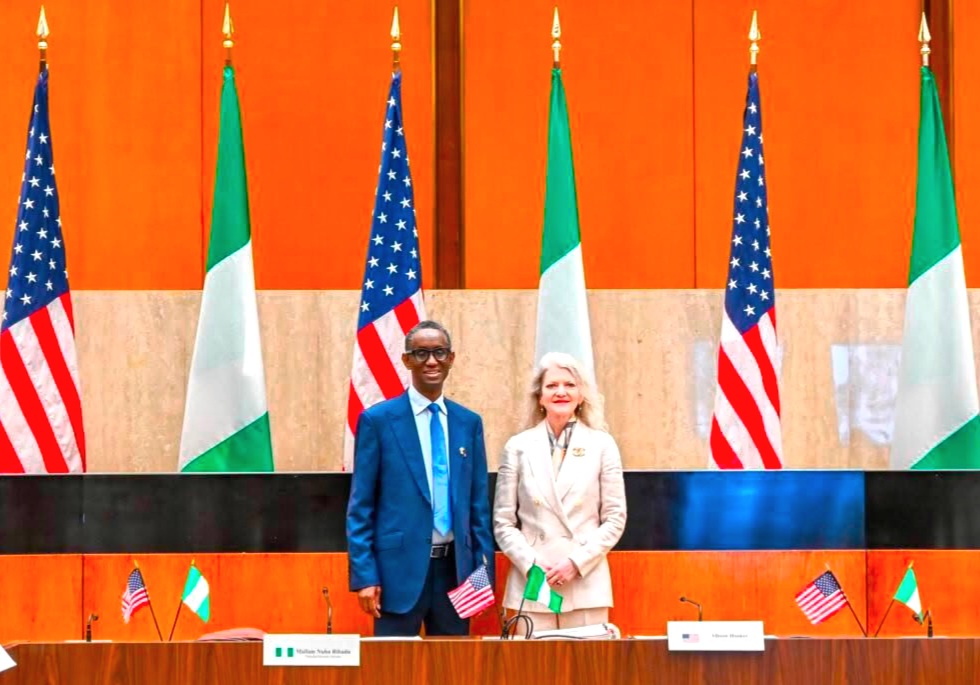
The minister made this known when she received the Deputy Director-General (Operations) of IOM, Ms. Ugochi Florence Daniels, on a courtesy visit to her office at the Ministry of Foreign Affairs, Abuja.
Odumegwu-Ojukwu attributed the rising cases of irregular migration among Nigerians to the country’s huge population, noting that over 70 percent of citizens are under 40 and in need of employment opportunities. She said this demographic factor makes migration a critical part of the Tinubu administration’s foreign policy, structured around the “4-Ds: Democracy, Demography, Diaspora, and Development.”
She stressed that the government remains committed to citizen diplomacy and the welfare of the over 17 million Nigerians in the diaspora, whose contributions to national development remain significant. The minister also called on IOM to promote positive narratives about migration while discouraging the “myth of greener pastures,” which fuels irregular movement.
Acknowledging the longstanding cooperation between Nigeria and IOM, she commended the Organisation’s interventions, particularly its rapid response during recent flooding in Niger State that displaced thousands. She urged IOM to align its programmes with national priorities, while also seeking funding from non-traditional donors to overcome financial constraints.
Odumegwu-Ojukwu further disclosed Nigeria’s readiness, under the UN80 Reform Initiative, to host international organisations relocating from Geneva or New York.
On her part, Ms. Daniels reaffirmed IOM’s commitment to supporting Nigeria, revealing that over 70,000 irregular migrants have been returned home through its programmes, while 27,000 have been reintegrated via the Assisted Voluntary Return and Reintegration Programme (AVRR).
She said IOM remains dedicated to promoting humane and orderly migration, aligned with the UN Sustainable Development Goals (SDGs) and the African Union’s Agenda 2063.


 Chidiogo asuke