Precious Chukwuwa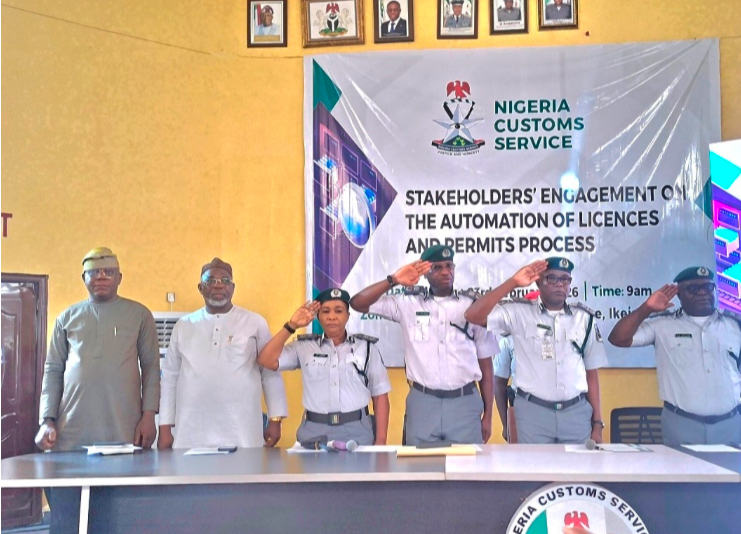
The Nigeria Customs Service (NCS) has rolled out full automation for the application, management, and renewal of trade licences and permits for importers, customs brokers, ship chandlers, and other operators in Nigeria’s maritime sector.
The new digital platform, known as the Licence and Permit System (LPS), is designed to simplify procedures, standardise documentation, and eliminate the persistent delays and inefficiencies associated with manual processing, which have historically led to revenue losses for both the government and private businesses.
Speaking at a stakeholders’ sensitisation programme in Lagos, the Zonal Coordinator of Zone A, Mohammed Babandede, noted that the manual system had long subjected operators to excessive paperwork, long queues, and uncertainty.
He explained that under the automated system, importers, exporters, clearing agents, freight forwarders, and shippers will no longer need to visit Customs offices or the headquarters in Abuja to process their licences. Instead, the entire procedure can now be completed online from any location, with real-time tracking of application status.
Babandede described the initiative as a response to demands for faster, more transparent, and more efficient service delivery, adding that automation would reduce errors and ensure fairness and consistency in processing.
He added that the awareness campaign, which began in Lagos due to the high trade volume handled in Zone A, will extend to other zones to ensure smooth nationwide implementation and support the agency’s broader modernisation agenda.
Also addressing participants, the Comptroller of Customs, Licence and Permit Unit, Tariff & Trade Department, Dr. Ngozika Anozie, emphasised that digitising the process is key to improving ease of doing business in the maritime industry and strengthening revenue generation for Customs and the Federal Government.
According to her, the system is structured to curb fraudulent practices, as any fake document uploaded will be automatically rejected, while genuine submissions will be processed accordingly.
Anozie further highlighted that every licence or permit issued generates statutory revenue for the government, stressing that increased efficiency in processing will ultimately translate into higher revenue for the NCS and the broader Nigerian economy.
She assured stakeholders that the system has been designed to be user-friendly and seamless, noting that officers across Customs Area Commands have already been trained to manage the new process efficiently, resulting in improved productivity and faster document handling.


 Ifejika joyce