Precious Chukwuwa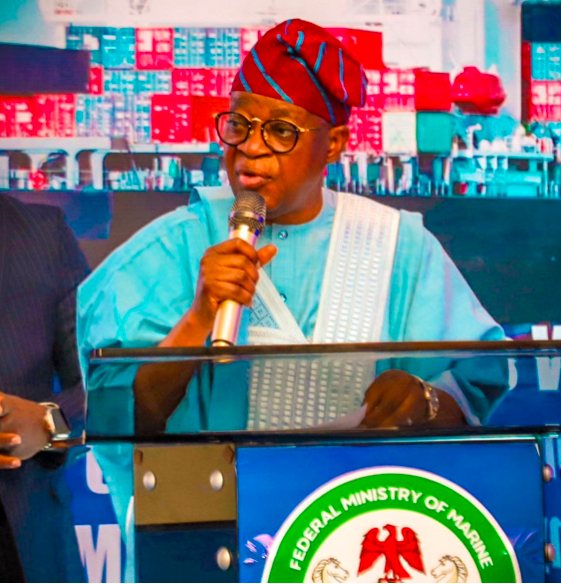
The Federal Government has approved the digitisation of Nigeria’s fish import licensing process as part of efforts to improve transparency, efficiency, and regulatory control within the fisheries sector.
Following the approval, the Minister of Marine and Blue Economy, Adegboyega Oyetola, directed the Department of Fisheries and Aquaculture to fast-track the implementation of the digital licensing platform. The move reflects the government’s renewed drive to modernise marine administration while strengthening domestic fish production.
Oyetola explained that the initiative aligns with President Bola Ahmed Tinubu’s Renewed Hope Agenda, which focuses on economic diversification, food security, job creation, and institutional reforms. He described the reform as a key step toward repositioning Nigeria’s fisheries sector for sustainable growth and global competitiveness.
According to the minister, the digitalisation of fish import licensing will remove administrative bottlenecks, enhance transparency, and bring Nigeria’s regulatory processes in line with international best practices. He noted that the reform would simplify procedures for legitimate operators, improve government oversight, and promote accountability, while supporting the broader goal of increasing local fish production.
The approval marks a major milestone in the reform programme of the Federal Ministry of Marine and Blue Economy, which seeks to deploy technology-driven solutions to improve governance, reduce bureaucracy, and strengthen accountability across the fisheries value chain.
Replacing the manual licensing system with a digital platform is expected to speed up application processing, reduce delays and duplication, and significantly limit human interference and administrative inefficiencies. The automated system will also enhance regulatory compliance by ensuring that licences are issued only to qualified and properly registered importers, thereby curbing illegal and unregulated fish imports.
Once fully implemented, the platform will provide real-time data on fish import volumes, enabling the ministry to identify supply gaps and make informed, evidence-based policy decisions. Improved data analytics will support strategic planning, ensuring import licences align with national food security goals while protecting local producers from unfair competition.
Oyetola emphasised that the reform is closely tied to the ministry’s commitment to revitalising local aquaculture. He stated that Nigeria has the capacity to achieve self-sufficiency in fish production and that policies must encourage investment in local fish farming while responsibly managing imports.
He added that the government aims to gradually reduce dependence on imported fish by strengthening domestic capacity, creating jobs, and providing a more competitive and well-regulated environment for Nigerian fish farmers.


 Chidiogo asuke