Tochukwu Chukwu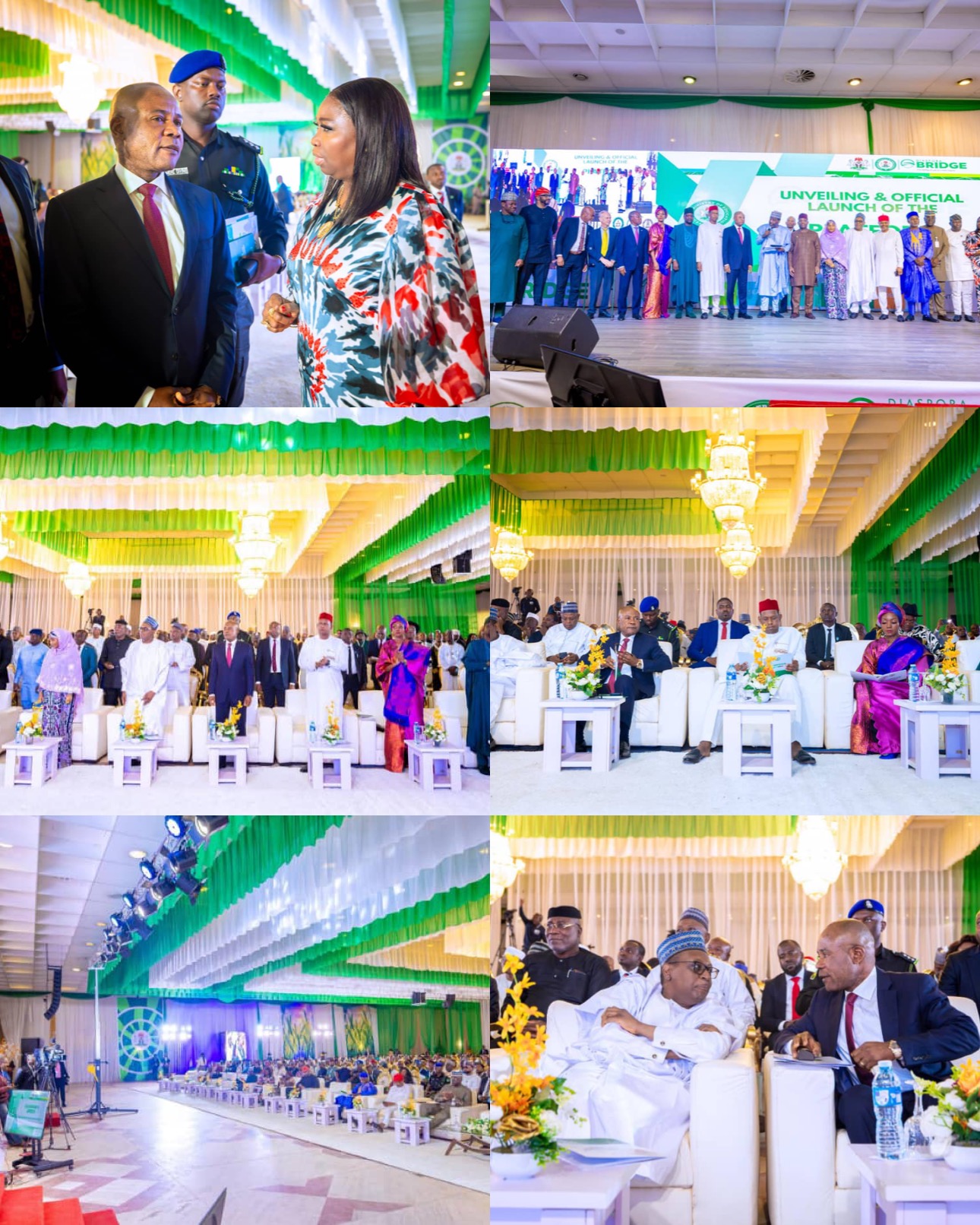
Enugu to Establish Universities of Education, Agriculture – Gov. Mbah
…Positions State as Knowledge Capital and Diaspora Innovation Powerhouse
In a bold move to position Enugu State as Nigeria’s premier knowledge and innovation hub, Governor Dr. Peter Ndubuisi Mbah has announced plans to establish two new state universities—the Enugu State University of Education and Technology (ESUET) and the Enugu State University of Agriculture and Technology (ESUAT)—as part of his administration’s far-reaching education reform agenda.
Governor Mbah made this known on Monday at the State House, Abuja, during the official launch of the Diaspora Bridge Platform, a digital innovation created to connect Nigerian professionals in the diaspora with local tertiary institutions for collaboration in teaching, research, innovation, and capacity building.
Describing education as the “single most important sector upon which our nation’s socio-economic fate depends,” Mbah expressed Enugu State’s readiness to lead a new era of international collaboration, powered by innovation and diaspora expertise.
“Enugu is ready to host and lead diaspora collaborations. In addition to expanding our existing seven public tertiary institutions, we are establishing two new universities – ESUET and ESUAT – to drive future-focused learning and economic growth,” he said.
The governor highlighted that the platform will serve as a strategic connector between the country’s leading academics abroad and its growing institutions at home, particularly in STEMM disciplines—Science, Technology, Engineering, Mathematics, and Medicine.
He added that Enugu’s commitment to education has been unmatched, with over 33% of the state’s budget consistently dedicated to the sector, and the ongoing construction of 260 Smart Green Schools that will open in September 2025 as part of a multi-tier education overhaul.
“Our vigorous investment in education and innovation is deliberate. We are not just building schools; we are building systems that will equip students with digital, foundational, and job-ready skills through applied learning technologies—AI, Simulation, Augmented Reality, and more,” Mbah said.
The governor further revealed plans to establish eight Technical and Vocational Education and Training (TVET) colleges, one in each federal constituency of the state, to promote skills-based learning and entrepreneurship from the grassroots.
In his remarks, Governor Mbah commended the Federal Ministry of Education and the Minister of State for Education, Dr. Tunji Alausa, for the Diaspora Bridge initiative, which he described as “an urgent call to reconnect global expertise with local purpose.”
“For too long, we’ve seen the diaspora mainly through the lens of economic remittances. But now, we must look beyond — toward how their collective knowledge, innovation, and financial muscle can serve as the engine for enduring development.”
Mbah emphasized that Enugu’s newly established Center for Experiential Learning and Innovation (CELI) will anchor these reforms by focusing on skill development tailored to modern industry demands.
“When you think STEMM, think Enugu State. When you think innovation and opportunity, come to Enugu State. We are open, we are ready, and we are already building the future,” he concluded.
With this landmark announcement, Enugu is poised not just to lead subnational education reform in Nigeria, but to emerge as a continental model for education-industry-diaspora integration in the 21st century.


 Chidiogo asuke