Ugamatv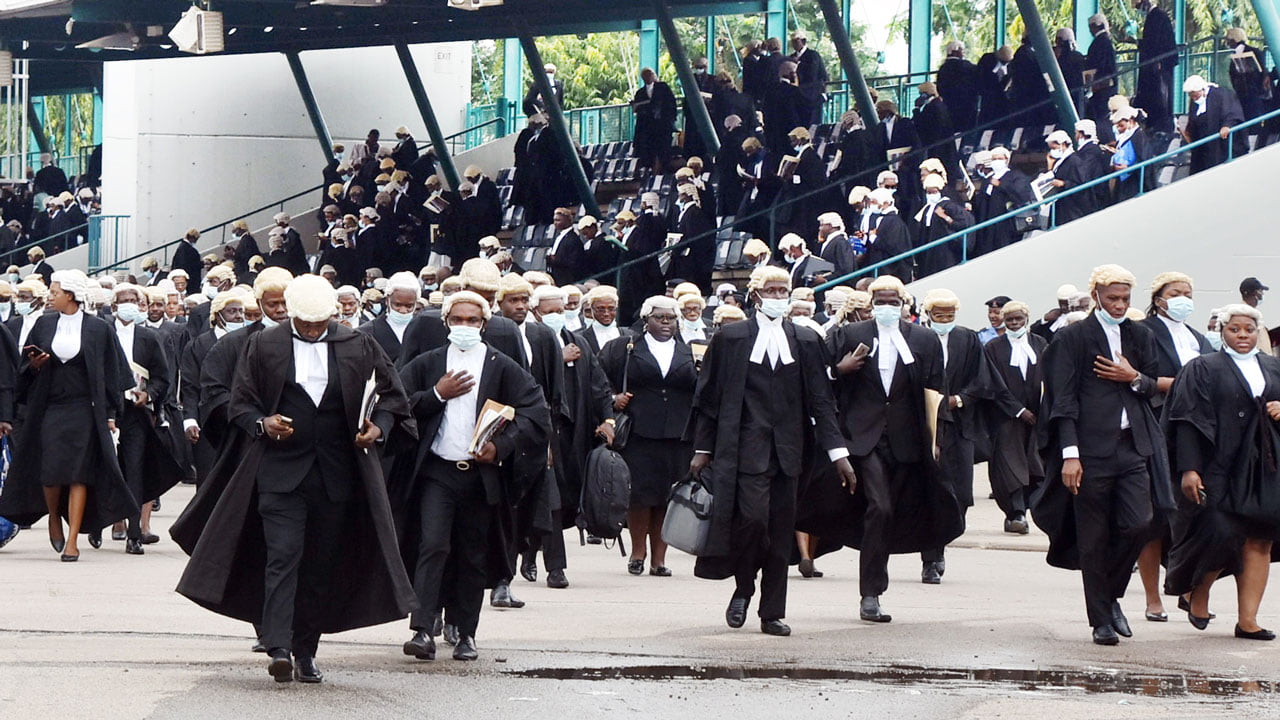
The Nigerian Law Society (NLS), a breakaway body formed as an alternative to the Nigerian Bar Association (NBA), is facing mounting legal battles following its recent national election.
Two lawyers, Timothy Tersugh Ahua and Oluwadare Thomas, have filed separate suits at the Federal High Court over alleged electoral fraud and violation of data privacy rights by NLS promoters and electoral committee members.
In the suit numbered FHC/ABJ/05/1506/2025, filed in Abuja, Ahua accused key NLS promoters, including Chief Mela Audu Nunghe, SAN; Dr. Ugoji Eze; Chief Bolaji, SAN; and others, of conducting an election that violated the NLS constitution and deliberately excluding his name from the list of qualified candidates. He asserted that he was the sole nominee for Secretary General, and thus should have been declared elected unopposed.
Ahua, who invoked relevant provisions of the Federal High Court Civil Procedure Rules, demanded that the court declare him and all unopposed candidates as duly elected national officers of the NLS. He alleged reputational harm, financial loss, and emotional distress due to what he called a “hand-picked” election process.
In a separate case filed at the Federal High Court in Abeokuta, lawyer Oluwadare Thomas raised broader constitutional and data privacy concerns. His suit lists Mela Nunghe, SAN; Dr. Ugoji Eze; the Corporate Affairs Commission (CAC); National Information Technology Development Agency (NITDA); and the Nigerian Data Protection Commission (NDPC) as respondents.
Thomas alleged that his personal data was used without consent for the NLS election, in violation of Section 37 of the 1999 Constitution and the Nigeria Data Protection Act, 2023. He also cited non-compliance with the General Application and Implementation Directive (GAID), 2025, and claimed his data was unlawfully published in a voter list.
Furthermore, he questioned the legitimacy of the NLS to organize an election while its legal status remains in dispute, especially after the CAC issued a public notice and with litigation ongoing.
Thomas is seeking injunctive relief, declaratory judgments, and ₦50 million in damages, as well as a court order compelling NITDA and NDPC to investigate and sanction the individuals involved.
As tensions rise over the formation and conduct of the Nigerian Law Society, these lawsuits are expected to test the boundaries of electoral integrity, data protection, and legal association governance in Nigeria’s legal profession.


 Chidiogo asuke