Ugamatv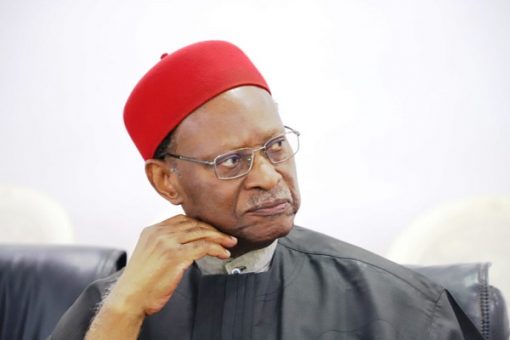
Former Secretary-General of the Commonwealth, Chief Emeka Anyaoku, has renewed calls for Nigeria to adopt a new, truly democratic and pluralistic constitution, rejecting the 1999 Constitution (as amended) as a military-imposed document unfit for the nation’s complex realities.
Anyaoku made the remarks in Abuja on Wednesday at the opening session of a three-day Emergency National Constitutional Summit themed “Actualising a Constitutional Democracy That Works for All in Nigeria”. The summit was organized by The Patriots in collaboration with the Nigerian Political Summit Group (NPSG).
Delivering a powerful critique of Nigeria’s current governance framework, the elder statesman said the 1999 Constitution has failed to reflect the country’s diversity and has stifled national development, social cohesion, and effective leadership.
“Nigeria is a pluralistic country, and like all successful pluralistic nations, its constitution must be structured by elected representatives of its diverse people—not imposed by military decree,” Anyaoku stated.
“The 1999 Constitution is not people-made. It is a military creation that encourages excessive administrative spending while failing to deliver the dividends of democracy. What Nigeria needs is a new constitution—one created and endorsed by its people.”
Nigeria’s Decline: Poverty, Insecurity, and Lost Hope
Chief Anyaoku lamented that 65 years after independence, Nigeria now bears the shameful title of the “poverty capital of the world”. He pointed to rising insecurity, particularly in the Middle Belt, Northeast, and Northwest, where kidnappings and killings are rampant and farmers can no longer safely access their lands.
“Insecurity is rampant, our infrastructure is deteriorating, and national unity is crumbling. Many of our youth have lost confidence in the country’s future,” he said.
He attributed this deterioration to the failure of Nigeria’s governance structure, adding that the current 36-state federal arrangement has proven incapable of replicating the development achieved under the 1963 Constitution.
“There’s an eroding sense of national unity. We are a pluralistic country still struggling to become a nation,” he added.
New Constitution Must Reflect People’s Will
The former diplomat emphasized that the summit must yield actionable recommendations for a new constitutional order—one grounded in popular participation, regional equity, and good governance.
He proposed a wide array of constitutional reforms for discussion at the summit, including:
Presidential vs. Parliamentary system
Rotation and tenure of leadership
Structure and powers of federating units
Unicameral or bicameral legislature
Security architecture
Resource control and revenue sharing
Political party organization and electoral reforms
“Those who argue that leadership matters more than the system forget that the system often determines the kind of leaders it produces,” Anyaoku said. “We must adopt a framework that rewards merit, inclusion, and accountability.”
He recommended that the proposed constitution be drafted by representatives elected solely for that purpose and ratified through a national referendum to give it full legitimacy.
Town Halls Feed Into Summit
Anyaoku noted that the summit had been preceded by town hall meetings across Nigeria’s six geopolitical zones, whose insights were compiled and integrated into the ongoing deliberations.
He expressed hope that the summit—attended by prominent statesmen, civil society leaders, women, youth representatives, and other stakeholders—would chart a practical path toward a new, people-oriented constitution capable of reversing Nigeria’s decline and building a united, prosperous nation.


 Chidiogo asuke