Precious Chukwuwa

The United States has imposed terrorism-related sanctions on three Nigerian bureaux de change and their alleged owner, Mukhtar Adamu Muhammad, over accusations of financing the Islamic State West Africa Province (ISWAP), intensifying international scrutiny of Nigeria’s financial system and underscoring growing counterterrorism cooperation between Washington and Abuja.
The sanctions, announced by the U.S. Department of the Treasury’s Office of Foreign Assets Control (OFAC) and the U.S. Department of State, identified Muhammad as a key ISWAP financial facilitator accused of conducting money transfers and providing financial services on behalf of the terrorist group.
Also sanctioned were Nine to Nine Exchange Bureau de Change Limited, Manhattan Bureau de Change Limited and Generation Currency Bureau de Change Limited, which U.S. authorities alleged were owned, controlled or directed by Muhammad and used to move funds linked to ISIS operations.
The designations are part of a wider crackdown targeting three individuals and six entities operating across West Africa, Europe and the Middle East that Washington says helped ISIS raise, transfer and conceal funds to sustain its global activities.
In addition to the Nigerian network, the sanctions targeted France-based Miloud Abderrahmane and Syria-based Abdelhakim Boukich. U.S. authorities accused Abderrahmane of facilitating financial transactions for ISIS affiliates and distributing bomb-making instructions, while Boukich allegedly used cryptocurrency channels to transfer funds to ISIS associates in multiple countries, including the United States.
Under the sanctions, all property and interests belonging to the designated individuals and entities under U.S. jurisdiction have been frozen, while American citizens and businesses are prohibited from engaging in transactions with them. The measures are also expected to restrict their access to major segments of the international financial system.
The action comes amid ongoing efforts to combat terrorism financing in Nigeria and the wider Lake Chad Basin, where ISWAP has emerged as one of the Islamic State’s most active and deadly affiliates since breaking away from Boko Haram in 2016.
Security analysts say the sanctions highlight the evolving and increasingly transnational nature of terrorist financing networks, reinforcing calls for stronger financial intelligence systems, tighter regulation of money service businesses and deeper international cooperation to prevent extremist groups from exploiting legitimate financial channels.
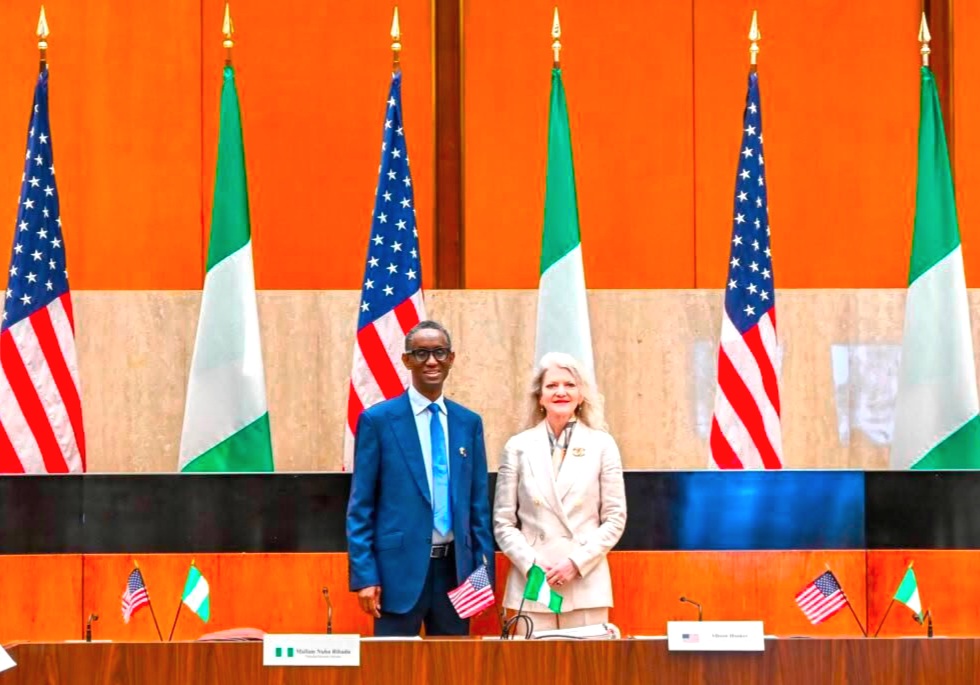
The development also reflects expanding security collaboration between Nigeria and the United States, particularly in intelligence sharing, counterterrorism operations and efforts to dismantle the financial infrastructure sustaining insurgent groups across the region.


 Chidiogo asuke