Ifejika joyce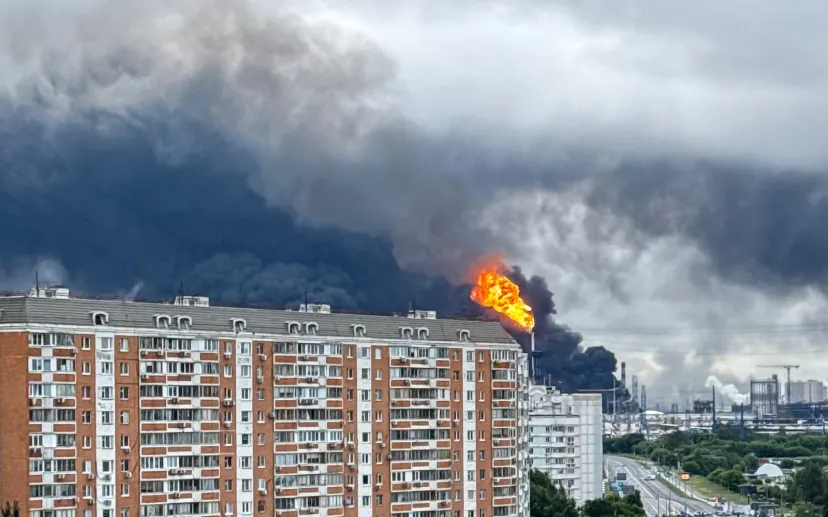
Ukraine has launched its largest drone offensive on Moscow in two years, according to Russian state-run news agency TASS, in an attack that damaged infrastructure, caused fires, and sent debris raining down in areas across the capital region.
Air defenses shot down more than four dozen drones bound for the Russian capital overnight into Thursday, according to Moscow Mayor Sergei Sobyanin. While a massive assault for the capital, the barrage was part of a larger Ukrainian operation targeting a broad swath of Russia, with air defenses active across multiple regions.
Flights at all major Moscow airports were temporarily suspended on Thursday, Reuters reported, citing the Russian aviation agency.
Kyiv has been stepping up its targeting of Russian energy infrastructure in long-range attacks in recent weeks, which Ukrainian President Volodymyr Zelensky has framed as a key strategy in forcing Moscow to end the war.
Zelensky called Thursday’s attacks “a fully justified response to Russian strikes on our cities and communities,” in a Telegram post from Brussels, where he arrived for meetings with NATO leaders.
“In recent days, all our partners have noted the precision and effectiveness of our mid-range strikes and long-range sanctions,” he said.
Ukraine launches largest attack on Moscow in two years
Among Ukraine’s targets was the Moscow Oil Refinery in the southeastern district of Kapotnya, which was also struck and damaged by Ukraine earlier in the week.
Video geolocated by CNN showed thick black smoke billowing from a section of the oil refinery before a large explosion rocks another part of the complex. Another video showed a large black plume of smoke rising near Moscow’s Sadovod trade center.
An apartment building in Zhukovsky, outside Moscow, was also damaged by falling debris, while a shopping center was impacted in the capital, according to TASS and local authorities.
Russia fired back at Ukraine with a major overnight barrage of its own, utilizing both missiles and drones, according to the Ukrainian Air Force. The strikes targeted several regions across Ukraine, hitting infrastructure that ensures normal life, including energy and gas facilities far from the front lines.
Ukraine has launched extensive drone attacks against Russian refineries and military facilities in recent months, with targets including naval facilities, oil depots, and terminals. Some attacks took place in the Leningrad region, where St. Petersburg recently hosted a global economic forum often dubbed Russian President Vladimir Putin’s version of Davos.
Russia’s state budget relies on oil earnings for at least one-third of its revenue, according to analysts. Since the Ukraine war began, the pool of buyers for Russian oil has shrunk, thanks to stricter sanctions from the European Union and Washington.
Thursday’s attack came soon after world leaders gathered at the G7 summit in France, where Zelensky said “everyone” had agreed to help Ukraine secure more air defense capabilities—and that US President Donald Trump had received his suggestions positively.
Earlier in the week, Trump encouraged Russia to agree to a deal that would end the war, now in its fifth year. “Russia’s lost tremendous amounts of people, and so had Ukraine,” he said.
On Thursday at a gathering of NATO defense ministers in Brussels, NATO Secretary General Mark Rutte said he and Zelensky had discussed the war during a meeting a day earlier.
“Ukraine is doing really well,” Rutte said, citing heavy monthly Russian losses. He added that discussions are still ongoing “with all allies to make sure Ukraine has what it needs,” including missile interceptors and weapons systems.
The NATO meeting comes at a pivotal time for Europe, which has been reacting to shifting diplomatic dynamics and discussions regarding the future allocation of US hardware and forces stationed in Europe.
As a member of the alliance, the US is part of a cooperative framework called the “NATO Force Model,” in which participating countries provide their support and resources to joint defense, security, and crisis response.
Rutte played down the impact of potential shifts in US resources.
“Europeans are already backfilling a lot of those resources. We are in a good place,” he said, adding that were NATO to come under attack, its member states, including the US, would ramp up its military presence wherever needed.
Speaking next to Rutte on Thursday, US Defense Secretary Pete Hegseth said NATO is now more capable of tackling the conventional defense of Europe, with many countries stepping up their commitments—though others need to do more, he said.
“I think that’s important, friends being honest with friends, making sure that they can step up,” he added.


 Chidiogo asuke