Precious Chukwuwa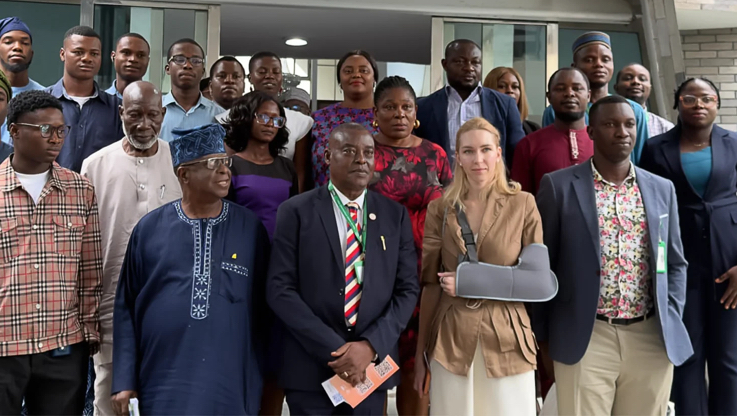
Russia has reiterated its commitment to deepening bilateral relations with Nigeria, as both countries position themselves as influential players in a shifting global system moving away from unipolar dominance toward a multipolar structure.
This was highlighted at a roundtable discussion on Nigeria–Russia relations held in Lagos, organised by the Nigerian Institute of International Affairs (NIIA) in collaboration with the Moscow State Institute for International Relations (MGIMO).
Speaking at the event, Attaché to the Russian Embassy in Nigeria, Alexey Starikov, noted that the global system is undergoing significant transformation. He explained that both Russia and Nigeria are playing active roles in shaping a more balanced international order based on equality and multilateral cooperation.
Starikov emphasised Africa’s growing relevance in global affairs, describing Nigeria as a key voice for developing nations. He reaffirmed Russia’s support for strengthening Africa’s position on the world stage.
He further stated that relations between both countries remain cordial, with no major political disagreements, and highlighted opportunities for increased collaboration in areas such as energy, agriculture, infrastructure, security, irrigation, and human capital development. Russia, he added, is ready to share expertise, particularly in security and capacity building.
According to him, plans are underway to convene a meeting of the intergovernmental cooperation working group in Russia, stressing that the partnership should remain practical, forward-looking, and results-driven. He also underscored the importance of academic and intellectual exchanges in strengthening bilateral ties.
Director-General of the NIIA, Eghosa Osaghae, highlighted increasing attention on Russia’s activities in the Sahel region and stressed the value of academic collaboration with MGIMO. He noted that the partnership would open opportunities for Nigerian scholars to study in Russia and enhance institutional capacity.
Osaghae added that the collaboration builds on earlier efforts and aligns with plans to expand foreign language studies, including African languages such as Swahili, Afrikaans, Amharic, and Hausa, alongside the establishment of a foreign languages laboratory.
Also speaking, an analyst at MGIMO, Valery Zhuchkov, outlined the institution’s history and global reputation as a leading centre for diplomatic and international studies, attracting students from over 90 countries, including several African nations.
He noted that the university runs Africa-focused programmes aimed at strengthening understanding of international relations and Russia’s development model. Initiatives such as the African Club and the Russia-Africa Forum, he said, are designed to foster collaboration, challenge stereotypes, and empower young people.
Zhuchkov added that MGIMO offers a range of academic programmes—from short courses to postgraduate studies—along with Russian language training to support international students. He also revealed efforts to increase Nigerian participation, particularly among young researchers.
Meanwhile, Director of Research at the NIIA, Joshua Bolarinwa, represented by Dr Ichimi, observed that West Africa is experiencing notable geopolitical changes, influenced in part by Russia’s evolving strategy in the region.
He explained that Russia is expanding its presence by investing in key sectors such as energy and mining, with activities in countries including Nigeria, Ghana, Egypt, and Algeria. Beyond economic interests, he noted that Russia is also shaping narratives that position it as a dependable alternative to Western powers.
The event concluded with the signing of a memorandum of understanding aimed at strengthening cooperation and delivering practical outcomes for both countries.


 Chidiogo asuke
 Chisom Orjiogbu