Tochukwu Chukwu
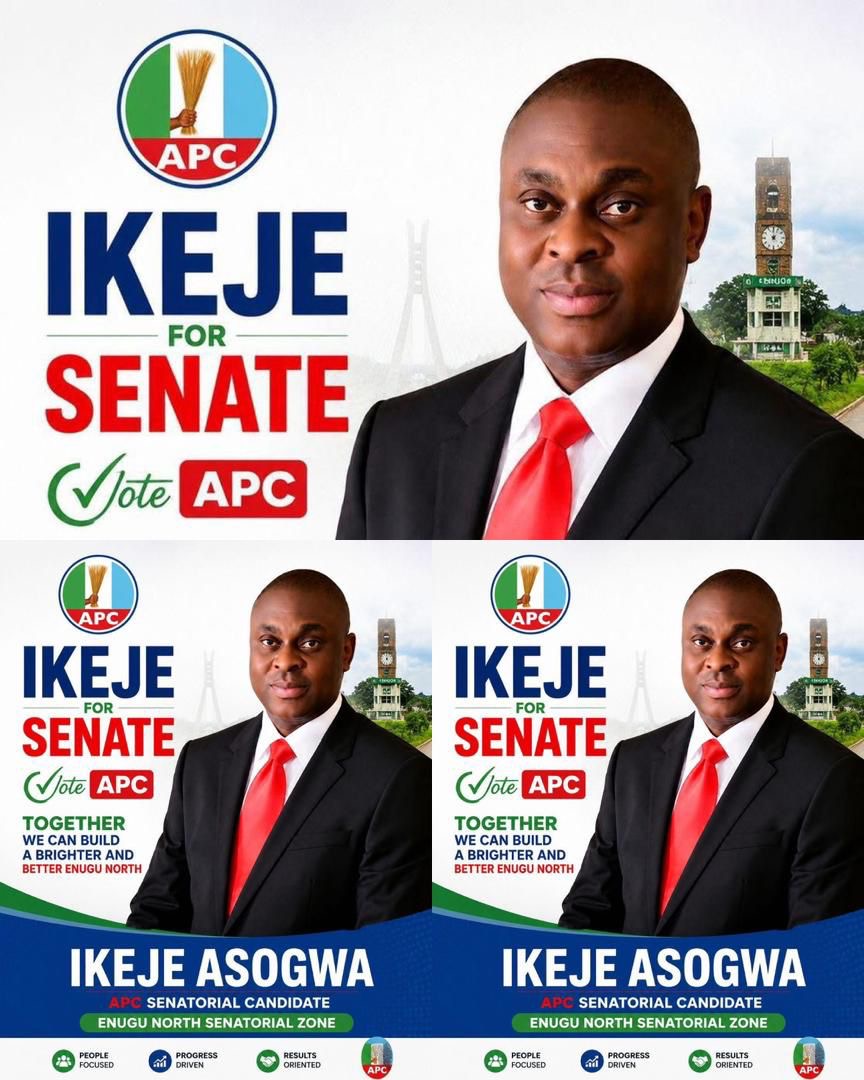
As the people of Enugu North Senatorial District, popularly known as Nsukka Zone, prepare to head to the polls on Saturday, June 20, the forthcoming senatorial by-election is shaping up to be a defining moment in the political and developmental trajectory of the region.
At the heart of the contest lies a critical choice—between tested leadership and uncertainty, between measurable progress and unfulfilled promises. For many observers, the election presents Ndi Nsukka with an opportunity to reaffirm their commitment to development-driven representation.
Among the candidates cleared by the Independent National Electoral Commission (INEC), Ikeje Israel Asogwa of the All Progressives Congress (APC) has emerged as a central figure in the conversation, widely regarded by supporters as a candidate with a demonstrable record of public service and institutional transformation.
Asogwa’s track record in public office has remained a focal point of his candidacy. During his tenure as General Manager of the Enugu State Housing Development Corporation (ESHDC) under the administration of former Governor Sullivan Chime, he oversaw a remarkable turnaround of what was once considered a moribund agency. Through strategic reforms and investor engagement, the corporation delivered over fifty housing estates, including the Coal City Garden Estate, Maryland Estate, Ivory Tower Estate, and Zoo Estate—projects that significantly reshaped the urban landscape of Enugu State.
Beyond infrastructure, his leadership reportedly created employment opportunities for thousands, particularly among youths from Nsukka Zone, enabling many to establish sustainable livelihoods.
Asogwa further expanded his impact in the education sector during his tenure as Chairman of the Enugu State Universal Basic Education Board (ENSUBEB) under the administration of former Governor Ifeanyi Ugwuanyi. His administration witnessed the construction of over 1,355 classrooms, the recruitment and training of more than 7,000 teachers, and the distribution of over 50,000 learning materials across public schools. These interventions, stakeholders note, helped revive primary education and improve learning conditions across the state, with Nsukka communities among the major beneficiaries.
In addition to his public service record, Asogwa is also recognized for privately funding scholarships for students within the senatorial district, reinforcing his grassroots appeal.
However, the race also features candidates from other political parties, each presenting varying degrees of experience and public service records. Nestor Ezema of the Peoples Democratic Party (PDP), a former Chairman of the Post Primary School Management Board (PPSMB), has faced criticism over his stewardship, with detractors pointing to limited reforms during his tenure.
Other contenders include Chika Idoko of the African Democratic Congress (ADC), Ejike Simon of the Labour Party, Ossai Okwudiri of the National Democratic Congress (NDC), Ugwuanyi Ugochukwu of the People’s Redemption Party (PRP), and Aneke Chukwuebuka of the Boot Party.
Political analysts note that while the field remains diverse, the electorate’s decision is likely to hinge on credibility, performance history, and the ability to deliver effective representation at the national level.
The APC, under whose platform Asogwa is contesting, has also highlighted its developmental footprint in the region, including investments in education through Smart Green Schools, healthcare infrastructure, and road networks spanning multiple local government areas within the senatorial zone.
As the countdown to election day continues, stakeholders are urging voters to prioritize competence, accountability, and long-term development over sentiment and political rhetoric.
Ultimately, the June 20 by-election is more than a contest of candidates—it is a referendum on the future of Nsukka Zone and the kind of leadership its people desire.


 Chidiogo asuke