Chidiogo asuke

Nigeria’s persistent inflationary pressures have pushed Africa’s most populous country to the bottom of global quality-of-life rankings.
This comes as Nigerian households and businesses continue to suffer, with the inflation rate rising for the third consecutive month in 2026 to 15.93 percent in May.
The National Bureau of Statistics (NBS), in its Consumer Price Index and inflation report, said headline and food inflation rose to 15.93 percent and 16.96 percent in May from 15.69 percent and 16.09 percent, respectively, recorded in April.
Accordingly, the country’s headline and food inflation increased by 0.24 and 0.87 percentage points, respectively.
NBS data further showed that, on a month-on-month basis, headline and food inflation stood at 1.75 percent and 2.98 percent, respectively.
This means that the country’s inflationary trend has persisted over the last three months. Rising prices of food, transportation, housing, and energy have remained the biggest contributors to the country’s escalating inflation rate.
The far-reaching implication is a higher cost of living and shrinking purchasing power for the majority of Nigerians. This is why Nigeria ranked lowest in the Quality of Life Index 2026, according to the latest data released by Numbeo. The country sat at the bottom alongside Sri Lanka and Bangladesh. The rankings are based on purchasing power, healthcare quality, safety, cost of living, pollution, traffic congestion, housing affordability, and climate.
Rising inflation deepens hardship for Nigerians — Oyedokun
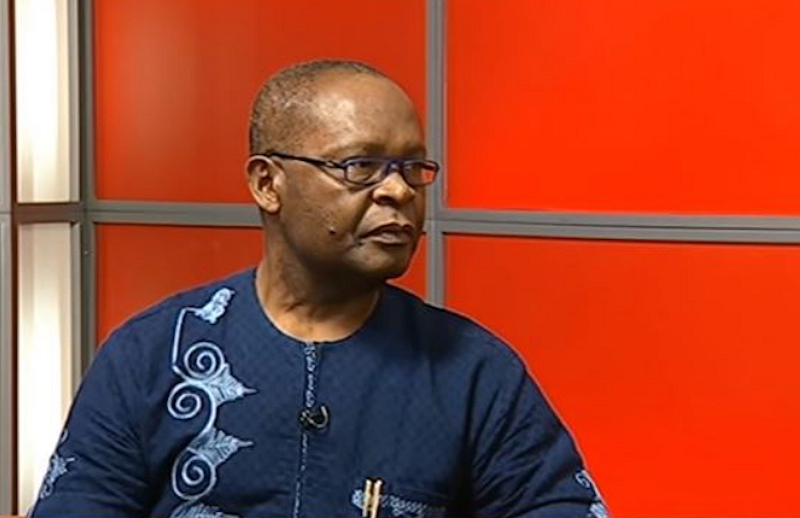
Speaking with UGAMATV, a professor of accounting and finance at Lead City University, Godwin Oyedokun, expressed concern over Nigeria’s rising inflation rate.
He warned that the continued increase in Nigeria’s inflation rate is worsening the economic hardship faced by households and businesses across the country.
Oyedokun said the third consecutive increase in the country’s inflation rate highlights the persistent economic pressures confronting Nigerians, particularly amid rising food and fuel prices.
According to him, the latest data confirm that many citizens continue to struggle with the high cost of living despite indications of macroeconomic stability in some sectors of the economy.
“The third consecutive rise in Nigeria’s inflation rate underscores the persistence of economic pressures facing households and businesses. With fuel and food costs driving the increase, the data confirm that many Nigerians continue to struggle with a high cost of living despite signs of macroeconomic stabilisation in some areas,” he told UGAMATV
The financial expert noted that the inflation figures reflect the reality that essential commodities, including food, transportation, and energy, are becoming increasingly unaffordable for many families.
He explained that as inflation continues to outpace income growth, the purchasing power of consumers declines, forcing households to reduce spending, savings, and investments in critical areas such as education and healthcare.
“The figures reflect the harsh reality that essential items such as food, transportation, and energy remain increasingly unaffordable for many families. As inflation outpaces income growth, purchasing power declines, forcing households to cut back on consumption, savings, and investment in education and healthcare,” Oyedokun said.
He further observed that higher fuel prices have far-reaching consequences across the economy, as they raise transportation and production costs, which are eventually transferred to consumers through higher prices for goods and services.
Oyedokun added that food inflation remains particularly damaging to low-income households because a large portion of their earnings is spent on basic necessities.
“Higher fuel prices have a multiplier effect across the economy because they increase transportation and production costs, which are ultimately passed on to consumers. At the same time, rising food inflation places a disproportionate burden on low-income households, who spend a significant share of their earnings on basic necessities,” he said.
Oyedokun stressed that the persistent rise in inflation underscores the need for broader policy measures beyond monetary tightening.
He called on the government to strengthen agricultural productivity, improve security in food-producing communities, invest in critical infrastructure, and reduce logistics costs to help ease inflationary pressures.
“The sustained upward trend in inflation highlights the need for policies that go beyond monetary tightening. Strengthening agricultural productivity, improving security in food-producing areas, investing in infrastructure, and reducing logistics costs will be essential to easing inflationary pressures and improving the welfare of ordinary Nigerians.
“Ultimately, while macroeconomic reforms may yield benefits over time, many citizens are still grappling with immediate and significant economic hardship,” Oyedokun said.
CPPE blames global energy shocks for Nigeria’s inflation rise
Also reacting, the Centre for the Promotion of Private Enterprise (CPPE) attributed Nigeria’s persistent inflationary pressures to the continuing impact of recent geopolitical tensions in the Middle East on global energy markets and supply chains.
CPPE’s Chief Executive Officer, Muda Yusuf, in a statement on Monday, noted that the country’s inflation challenge remains largely cost-push in nature.
As a solution, CPPE said: “Government intervention should focus on improving food security, strengthening logistics infrastructure, investing in mass transit and rail transportation, and enhancing energy supply.”