Precious Chukwuwa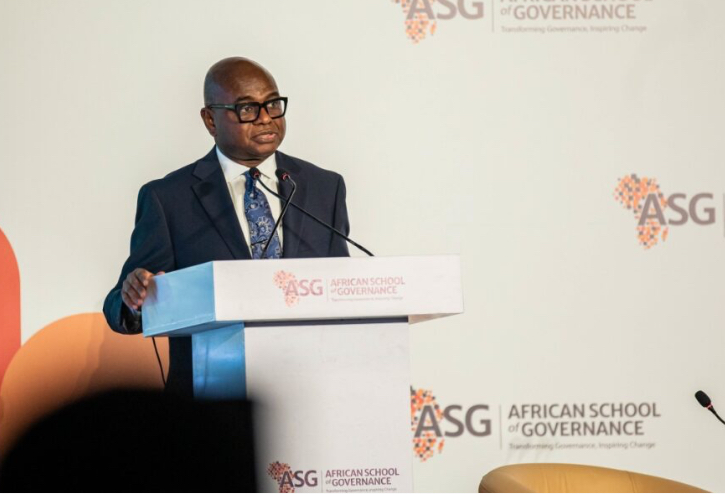
Former presidential candidate, Kingsley Moghalu, has argued that Nigeria’s growth continues to lag because both political leaders and voters often dismiss the value of ideas and intellectual engagement.
In a Facebook post on Thursday, Moghalu reflected on his decision to step away from partisan politics, a move he first announced in December 2022 after contesting the 2019 presidential election under the Young Progressives Party (YPP).
The former Deputy Governor of the Central Bank of Nigeria (CBN) stated that Nigeria’s political environment discourages intellectualism, noting that many successful politicians adapt by avoiding deep, idea-driven discourse.
According to him, leaving politics has allowed him to think and express his ideas freely without pressure to downplay intellectual depth. He contrasted Nigeria’s system with that of developed nations, where political debates are often rooted in philosophy and policy direction.
Moghalu criticised what he described as a culture driven by “stomach infrastructure,” where both politicians and voters prioritise immediate material benefits over thoughtful policy discussions. He said this mindset makes intellectualism appear irrelevant or even threatening in the political space.
Now serving as the pioneer president of the African School of Governance (ASG), Moghalu also expressed concern over the decline in the quality of Nigeria’s leadership compared to the era of the country’s founding figures.
He pointed to leaders such as Nnamdi Azikiwe, Obafemi Awolowo, and Ahmadu Bello as examples of intellectual leadership, questioning how the nation has drifted so far from that standard.


 Chidiogo asuke