Chisom Orjiogbu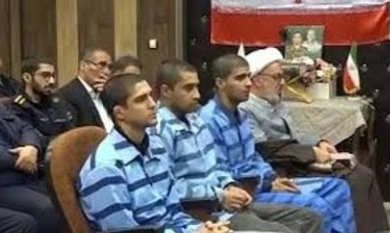
Authorities in Iran have publicly executed three men — including a 19-year-old wrestler — in what is being reported as the first confirmed executions connected to the nationwide anti-government protests that broke out earlier this year.
Reports from the judiciary’s official media platform, Mizan News Agency, stated that the executions were carried out on Thursday in the city of Qom after the legal process, including court approvals and representation by defence lawyers, had been completed.
The men — Mehdi Ghasemi, Saleh Mohammadi, and Saeed Davoudi — had been convicted over their alleged role in the killing of two security officers during demonstrations held on January 8. Authorities claimed the attack involved weapons such as knives, swords, and machetes.
Iranian officials also accused the three men of acting in the interest of foreign powers, specifically the United States and Israel, a claim often made by authorities in relation to protest activities.
They were sentenced under the charge of moharebeh — meaning “waging war against God” — which is considered a capital offence under Iranian law.
One of those executed, Saleh Mohammadi, had recently turned 19 and was known as an upcoming wrestler. He had previously won a bronze medal for Iran at the Saytiyev International Cup held in Russia. His case had drawn international attention, with officials in Washington earlier calling on Iranian authorities to stop the execution.
Human rights organisations have condemned the executions, arguing that the process was unfair and lacked proper legal safeguards.
The Norway-based Hengaw Human Rights Organization claimed that the confessions used to convict the men were allegedly obtained through torture and said there was no reliable evidence linking them to the killings.
Similarly, Amnesty International stated that Mohammadi did not receive adequate legal representation and that his trial was rushed, falling short of internationally accepted standards of justice. Reports also suggested that he suffered injuries, including a fractured hand, while in detention.
Another monitoring group, Iran Human Rights, described the trials as deeply flawed and based on forced confessions, adding that the executions appeared intended to intimidate the public and silence dissent.
Legal advocacy organisation Dadban also raised concerns, saying the defendants had very limited access to independent legal counsel during the process.
The executions come amid ongoing tensions linked to protests that began in late December 2025 and intensified in early January 2026. The demonstrations were largely driven by economic difficulties, currency instability, and dissatisfaction with the country’s political system.
Authorities in Iran responded with a strong security crackdown. Official figures presented to the United Nations state that 3,117 people were killed during the unrest, which the government attributed to acts of terrorism.
However, independent organisations, including the Human Rights Activists News Agency, have reported much higher numbers, estimating that more than 7,000 people may have died, with rights groups alleging that many victims were killed by security forces.
The government’s response has also resulted in large-scale arrests, with many detainees now facing charges that could lead to the death penalty.
A fact-finding mission backed by the United Nations recently warned that several individuals remain at risk of execution under circumstances that may not meet international legal standards.
According to estimates from Amnesty International, at least 30 people — including minors — could currently be facing execution in connection with the protests.

 Chidiogo asuke