Precious Chukwuwa
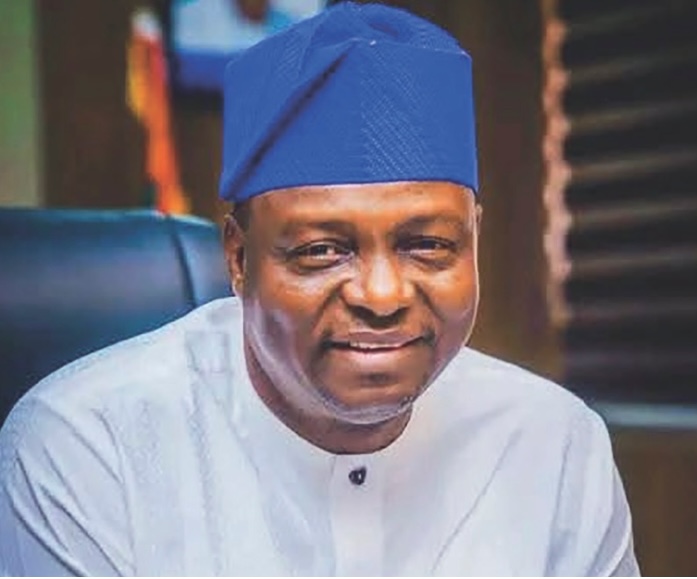
An intense power struggle is quietly brewing within the ruling All Progressives Congress (APC), threatening the party’s already delicate internal cohesion. Beneath the surface of democratic agitation lies a calculated political battle driven by aggrieved contractors whose grievances have expanded far beyond unpaid bills.
What began as protests over alleged delays in settling outstanding obligations has now escalated into a coordinated political offensive. The All Indigenous Contractors Association of Nigeria (AICAN), once focused solely on debt recovery, has aligned with the APC League of Democrats to demand the removal of specific cabinet members, accusing them of deliberately undermining the party’s future.
At the heart of the dispute is an estimated ₦4 trillion in unpaid contractor liabilities. The agitation has shifted from fiscal frustration to a direct challenge against the leadership of the Ministry of Finance, with warnings that unresolved tensions could seriously damage APC’s electoral prospects in 2027.
The contractors, supported by allied groups such as the Concerned Lawyers for Probity and Justice, have openly accused the Minister of Finance and Coordinating Minister of the Economy, Wale Edun, of frustrating presidential directives to clear outstanding payments from the 2024–2025 fiscal cycle. They allege that funds approved by the President are being deliberately withheld despite the issuance of payment warrants, a move they describe as sabotage of President Bola Tinubu’s Renewed Hope agenda.
While the Ministry of Finance insists that the delays are part of a transition to a more transparent and accountable payment framework, the contractors dismiss this explanation as a bureaucratic excuse aimed at pushing liabilities into the 2026 fiscal year.
Beyond the money, the conflict is deeply political. In Nigeria’s political ecosystem, contractors are not just service providers; they are major financiers, mobilisers, and power brokers within ruling parties. Delayed payments, they argue, cripple their businesses and choke the financial lifelines that sustain party structures at the grassroots.
According to the aggrieved blocs, the debt crisis is not about a lack of funds but a deliberate strategy by certain ministers to weaken pro-APC business interests ahead of 2027. They claim that selective payments are being made to favoured associates while loyal party financiers are left stranded.
Determined to change the narrative, influential contractors within the APC are now lobbying aggressively for the removal of ministers they see as obstacles. Their goal is clear: replace technocrats with politically savvy figures who understand patronage, cash flow, and the realities of party survival.
Although the 2026 Budget includes ₦1.7 trillion earmarked for outstanding contractor liabilities from 2024, the allocation has done little to calm tensions. Instead, contractors are demanding that President Tinubu “clean house” before the funds are disbursed, insisting that the same officials they accuse of sabotage should not be allowed to manage the new allocation.
In a statement issued on February 4, 2026, the APC League of Democrats, led by Hon. Babajide Oyewole, warned that failure to act could plunge the party into the kind of internal sabotage that cost the PDP the presidency in 2015.
A senior party source, speaking anonymously, confirmed growing pressure on the President to remove what were described as “obstinate” cabinet members. The source noted that, as the country edges closer to an election cycle, contractors remain critical to APC’s electoral machinery.
“These are not ordinary businessmen; they are major financiers of the party,” the source said. “Their concerns cannot simply be ignored if peace is to be maintained.”
Although another major cabinet reshuffle within a year may be politically difficult, insiders suggest that a compromise may be inevitable. Speculation is rife that recent defections of 22 lawmakers from Kano to the APC could pave the way for a minor reshuffle aimed at consolidating northern support and neutralising the sabotage narrative.
As the March 31 deadline for releasing the ₦1.7 trillion provision approaches, pressure groups are reportedly positioning their preferred candidates to replace ministers they consider underperforming.
Predictably, the controversy has split party stakeholders. While some insist the President should be left to govern without interference, others argue that decisive action is necessary.
Former Lagos APC Chairman, Chief Henry Ajomale, dismissed calls for a reshuffle as unnecessary, stressing that the President understands his cabinet better than outside critics. Similarly, Lagos APC spokesperson, Seye Oladejo, urged party members to trust Tinubu’s judgment, citing his track record of making tough decisions when required.
However, a senior APC figure and SAN, Senator Anthony Adeniyi, argued that a cabinet clean-up is overdue, noting that underperforming ministers are being shielded by a few effective ones. He maintained that the President should assess ministers individually and act accordingly.
Adding to the criticism, former Kano Chamber of Commerce President, Abdulkareem Daiyabu, blamed persistent national challenges—ranging from insecurity to power supply—on weak ministerial performance, insisting that accountability ultimately rests with the President.
As it stands, the Renewed Hope cabinet appears divided between those focused on economic reforms and those prioritising political survival. With 2027 drawing closer, contractors and party loyalists are betting that politics—not technocracy—will ultimately shape the President’s next move.


 Chidiogo asuke