Chisom Orjiogbu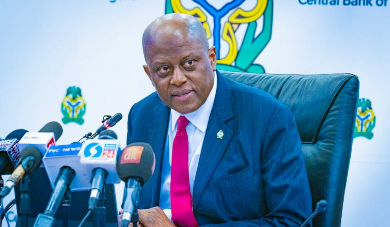
The Central Bank of Nigeria, CBN, has warned state governors that unpredictable fiscal policies at the sub-national level could frustrate efforts to achieve price stability under the country’s inflation-targeting framework.
The warning was delivered during a recent engagement between the apex bank and the Nigerian Governors Forum, NGF, as both institutions intensified collaboration aimed at strengthening inflation control measures nationwide.
According to a statement issued by the CBN, the Deputy Governor in charge of the Economic Policy Directorate, Muhammad Abdullahi, said Nigeria’s transition to an inflation-targeting regime represents a move toward a more transparent, rule-based, and forward-looking monetary policy system that requires strong coordination with state governments.
He explained that although the CBN remains responsible for deploying monetary policy tools to manage inflation, fiscal decisions taken by state governments significantly influence inflation outcomes.
Abdullahi noted that inflation targeting largely depends on managing public expectations, stressing that expansionary or poorly coordinated fiscal activities by states could weaken the impact of monetary policy measures.
He identified several channels through which states affect inflation, including borrowing patterns, rising domestic debt, spending behavior, wage obligations, execution of capital projects, salary arrears, contractor financing, overdrafts, and weak coordination on Federation Account Allocation Committee, FAAC, receipts, debt servicing, and cash management.
“In an inflation-targeting regime, persistent, unpredictable, or expansionary fiscal behavior at the sub-national level can significantly undermine price stability,” Abdullahi said.
Also speaking, the director general of the NGF, Abdullateef Shittu, hailed the apex bank and its leadership for what he described as the strategic foresight behind the engagement.
Nigeria’s headline inflation rate stood at 15.38 per cent in March 2026, while food inflation was recorded at 14.31 per cent.


 Chidiogo asuke