Precious Chukwuwa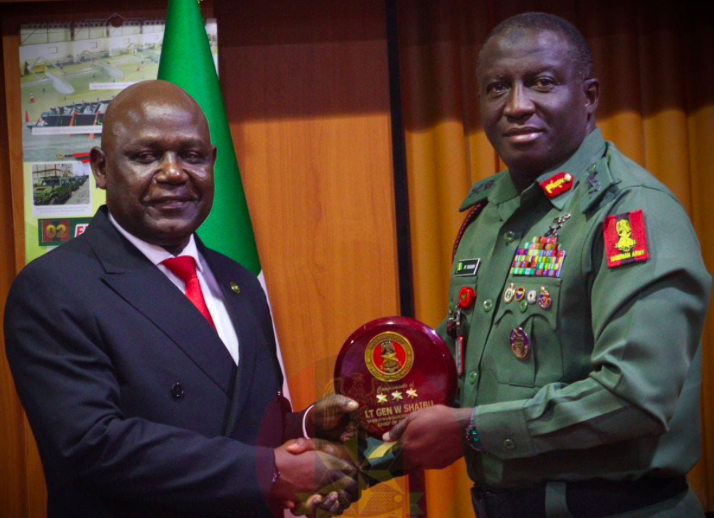
The Chief of Army Staff (COAS), Lieutenant General Waidi Shaibu, has announced that the Nigerian Army has finalised plans to expand its aviation wing in response to the country’s evolving security threats.
He explained that strengthening the aviation component is a key element of the Army’s ongoing modernisation efforts, describing it as a vital force multiplier in contemporary military operations.
According to the Army Chief, the expansion of aviation assets and the upgrade of unmanned aerial systems will enhance rapid response capabilities, improve precision targeting and boost situational awareness across various operational theatres. He made these remarks while hosting the Permanent Secretary of the Ministry of Defence, Mr Richard Pheelangwa, at the Army Headquarters in Abuja.
Lieutenant General Shaibu emphasised that consistent policy backing and reliable funding are crucial to unlocking the full operational benefits of enhanced air power. He noted that achieving dominance in today’s complex security landscape requires the seamless integration of advanced aviation platforms and unmanned systems with efficient administrative support structures.
He further stated that these advancements are transforming battlefield operations, strengthening the Army’s capacity to project force, maintain control of operational areas and safeguard civilians.
The COAS stressed that the sustainability of these reforms depends on stable funding mechanisms, transparent procurement processes and strong logistical systems. Predictable resource allocation, he said, will ensure long-term effectiveness and enable the aviation arm to effectively support ground forces.
Addressing personnel expansion approved by Bola Ahmed Tinubu, the Army Chief highlighted the growing demand for infrastructure and logistics. With thousands of new recruits currently undergoing training, he called for strategic investment in barracks and facility upgrades to provide adequate accommodation and improve welfare, noting that such measures are essential for morale, unity and operational readiness.
In his response, Mr Richard Pheelangwa described the visit as a strategic move to strengthen collaboration between the Ministry of Defence and the Army. He reaffirmed the ministry’s commitment to improving administrative coordination, removing procedural obstacles and ensuring effective resource management to support the aviation expansion and the Army’s broader modernisation drive in pursuit of national security.


 Chidiogo asuke