Precious Chukwuwa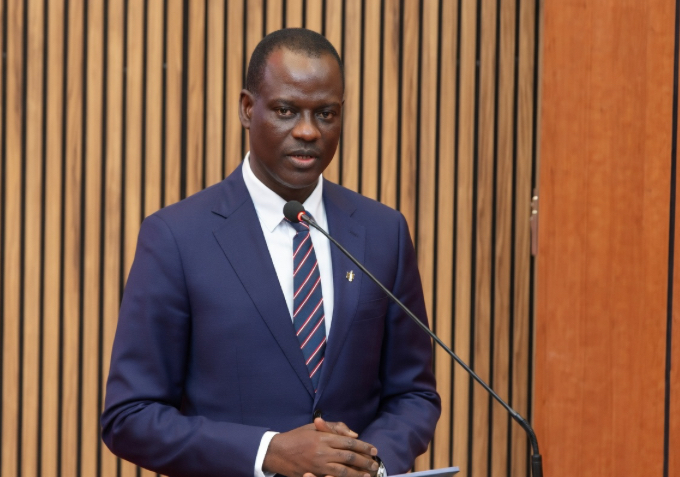
The newly confirmed Minister of State for Finance, Taiwo Oyedele, has suggested that Nigeria could reduce the impact of global oil price fluctuations by adopting a forward crude sales strategy.
Speaking during his screening before the Senate at the National Assembly Complex on Wednesday, Oyedele explained that selling a portion of Nigeria’s crude oil in advance at predetermined prices would help secure government revenues and provide greater stability for fuel prices.
According to him, the approach has been successfully adopted by several countries to protect their economies from sudden shifts in international oil prices.
“One approach used in other countries is forward crude sales. Nigeria can lock in a fixed price for a share of its crude output over a certain period. This will guarantee funding for the budget and help reduce the frequent price changes Nigerians have experienced recently,” he said.
Addressing concerns about unpaid government contractors, Oyedele recommended that public contracts should only be awarded based on available funds. He warned that persistent delays in payments have created what he described as a “trust deficit premium,” where contractors inflate project costs to offset the risk of late payments.
He explained that a project that should normally cost ₦1 billion could be priced as high as ₦2 billion because contractors factor in potential losses from delayed government payments.
On boosting Nigeria’s revenue base, Oyedele observed that the country has historically relied too heavily on taxation and oil revenues, while other sectors such as mining remain largely underdeveloped.
“For years, Nigeria has focused mainly on taxation and oil and gas revenues. This has caused us to overlook other sectors, including solid minerals, where there is strong potential to generate income,” he said.
He identified policy inconsistency as a major obstacle to growth in the mining industry, stressing that investors require clear and stable policies before committing to large-scale projects.
“The main challenge facing the solid minerals sector is policy uncertainty. While the Minister of Solid Minerals and his team are making progress, we must support their efforts by creating a stable policy environment. This may require legislative engagement with the National Assembly,” he added.
Oyedele also emphasised the importance of realistic budgeting and improved implementation of approved projects.
“When budgets are approved, there must be adequate funding and timely releases to ensure that projects — especially capital projects — are fully executed,” he said.
He noted that many of Nigeria’s budgets in recent years have been overly ambitious compared to the country’s revenue capacity, with more emphasis placed on expenditure than on realistic revenue projections.
According to him, nearly half of the budgets across the federal and state governments are currently financed through borrowing.
“Today, if you combine federal and state budgets, close to 50 per cent are deficit-funded. We must focus more on generating sustainable revenue to support our development goals,” he said.
Oyedele said that if confirmed by the Senate, one of his immediate priorities would be to conduct a comprehensive review of the government’s financial obligations, particularly debts owed to contractors.
“We must have a clear picture of what we owe. We should openly state the total debt to contractors, the resources available, the gap, and the plan for raising the funds,” he said.
He also called for prudent government spending to help address inflation and ensure that additional revenues generated from subsidy removal translate into tangible benefits for Nigerians.
“If government revenue increases because fuel subsidy has been removed, that effectively means the people are making a sacrifice. The only way to justify that sacrifice is to invest those funds in projects that directly improve their lives,” he said.
Oyedele further highlighted the economic benefits of investing in infrastructure that connects agricultural production to markets.
“Simple but strategic investments such as roads linking farms to warehouses, factories and markets can quickly boost productivity and deliver visible economic impact,” he added.


 Chidiogo asuke
 Tochukwu Chukwu