Chisom Orjiogbu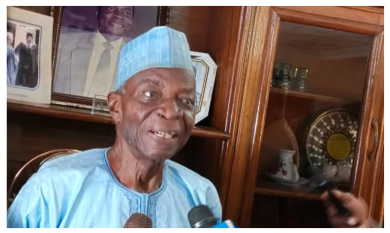
A former President of the Court of Appeal of Nigeria, Isa Ayo Salami, has questioned the eligibility of Peter Obi to contest in the 2023 presidential election, attributing the situation to what he described as judicial incompetence.
Salami made the remarks in Ilorin during a courtesy visit and award event organised by the Wole Soyinka Centre for Investigative Journalism (WSCIJ), led by its founder, Dapo Olorunyomi.
According to the retired justice, weaknesses among some judges have contributed to questionable court decisions. He stated that the shortcomings and lack of competence among certain members of the judiciary have resulted in rulings he considers inappropriate.
Salami argued that Obi should not have been allowed to run for president in 2023 under the Labour Party. He explained that by the time Obi left the Peoples Democratic Party (PDP), the Labour Party had already submitted its membership register to the Independent National Electoral Commission (INEC).
He pointed out that Nigeria’s constitution does not recognise independent candidacy and questioned how Obi became the party’s candidate if his name was not on its membership register at the time.
Salami also raised similar concerns about the eligibility of Abba Kabir Yusuf, the governor of Kano State, saying he should not have contested under the New Nigeria Peoples Party (NNPP). According to him, Yusuf’s name was not initially listed in the party’s official register, which he described as the primary record of membership.
The retired jurist further criticised the process of appointing judges in the country, suggesting that promotions to higher courts are sometimes influenced by regional considerations and the availability of positions rather than merit alone.
He added that some judicial decisions, including those from the Supreme Court, can be surprising, arguing that certain individuals may reach such positions not strictly because of exceptional qualifications but due to vacancies allocated to their regions.
Salami concluded by saying that some judges lack the necessary background and experience required for the role, noting that such appointments would have been unlikely in earlier years.


 Precious Chukwuwa
 Ifejika joyce