Precious Chukwuwa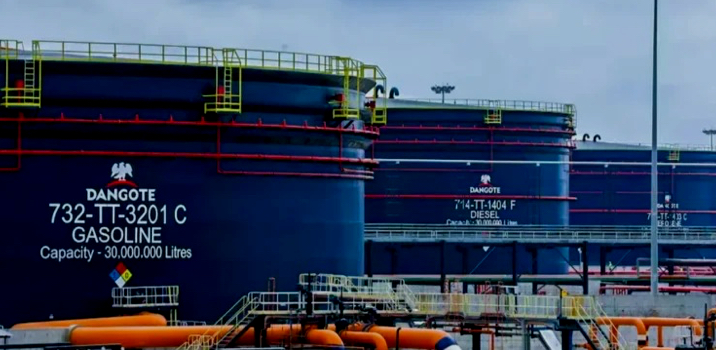
Dangote Petroleum Refinery & Petrochemicals has increased its crude oil processing capacity to 700,000 barrels per day (bpd), surpassing its installed nameplate capacity of 650,000bpd following a successful performance test conducted by Process Licensors.
The achievement marks a significant milestone for the refinery, reinforcing its status as the world’s largest single-train petroleum refinery and highlighting its growing operational efficiency and engineering capability.
Vice-President for Oil and Gas at Dangote Industries Limited, Devakumar Edwin, described the development as part of a broader strategy to expand the refinery’s capacity to 1.4 million barrels per day within the next 30 months.
According to him, the planned expansion will not only strengthen Nigeria’s energy security but also position the country as a major refining and export hub for Africa and beyond.
“The refinery’s growth trajectory reflects a deliberate move toward continental and global refining dominance, not just domestic supply sufficiency,” Edwin said.
Owned by industrialist Aliko Dangote, the refinery began fuel production in 2024 and has steadily increased output of petrol, diesel, aviation fuel and other petroleum products. It currently supplies both local and international markets, exporting refined products to several African nations and European countries, including the United Kingdom, France, Spain, Italy and the Netherlands.
The refinery has also supplied gasoline to the United States and jet fuel to Saudi Arabia, further expanding its global footprint.
Industry observers say the facility has played a crucial role in reducing Nigeria’s reliance on imported petroleum products, helping to conserve foreign exchange and improve fuel supply stability.
In April, Dangote Refinery emerged as the world’s largest exporter of jet fuel, according to S&P Global Commodities, underscoring its growing influence in global energy markets.
As production volumes continue to rise, the refinery has attracted increased interest from international crude suppliers and commodity traders, sourcing feedstock from both domestic and foreign producers.
Looking ahead, Aliko Dangote has expressed confidence that the facility will become the world’s largest refinery by 2028, with a projected processing capacity of 1.4 million barrels per day. The expansion is expected to drive job creation, boost industrial activity and strengthen Nigeria’s trade balance.
Beyond fuel production, the refinery is also expected to support downstream manufacturing through the supply of LPG, polypropylene and other industrial feedstocks, with plans to add Linear Alkylbenzene (LAB), a key raw material used in detergent production.



 Chisom Orjiogbu