Chidiogo asuke
Storm of public anger and dissatisfaction have continued to greet the Nigerian Senate’s latest move to amend the Electoral Act without providing for compulsory electronic transmission of election results.
Criticisms grew louder on Tuesday after the Senate plenary, with many Nigerians accusing Senate President Godswill Akpabio and the 10th National Assembly of deliberately weakening the country’s electoral process ahead of the 2027 polls.
UGAMATV reported that the Nigerian Senate on Tuesday amended the Electoral Act to permit the electronic transmission of election results, while simultaneously creating a major loophole that allows manual result sheets to prevail where electronic transmission fails.
The amendment was adopted during plenary proceedings with the Senate President, Godswill Akpabio, presiding.
Under the revised provision, presiding officers at polling units are required to electronically transmit results to the IREV portal after the completion of voting.
However, the amendment provides that where electronic transmission is unsuccessful due to communication or network failure, the manual result sheet — Form EC8A — shall become the primary basis for collation and declaration of results.
The development came after the upper chamber had earlier last week rejected the compulsory electronic transmission of results from polling units to the Independent National Electoral Commission’s, INEC, Result Viewing Portal, IREV.
The proposal, however, has sparked concerns among Nigerians, particularly over the reliance on Form EC8A as the primary source of election results, where disputes arise.
At the heart of the controversy is the claim by many critics that the proposed amendment effectively waters down the gains of electoral reforms, especially provisions relating to electronic transmission of results.
Civil society groups, opposition figures, and legal experts, who spoke to the media following the development, argue that the Senate’s position signals a dangerous return to the era of manual manipulation.
We can’t be intimidated – Senate insists
However, speaking on the aftermath of the controversy on Tuesday, Senate Spokesman, Yemi Adaramodu, maintained that the red chamber cannot be intimidated over the real-time transmission of election results saga.
Adaramodu made the remarks on Tuesday while fielding questions on Channels Television’s Politics Today programme.
According to him, lawmaking is not comical, adding that the Senate does not play to the gallery.
“We are not worried, we’re not to be intimidated, and we shouldn’t be intimidated.
“And moreover, as we know, in Nigeria and anywhere else where democracy is thriving, there will be shades of opinions, there will be shadows of ideas, and then we have to listen to all. So, that’s what happened,” he said.
Senate setting stage for chaos – Obidient Movement
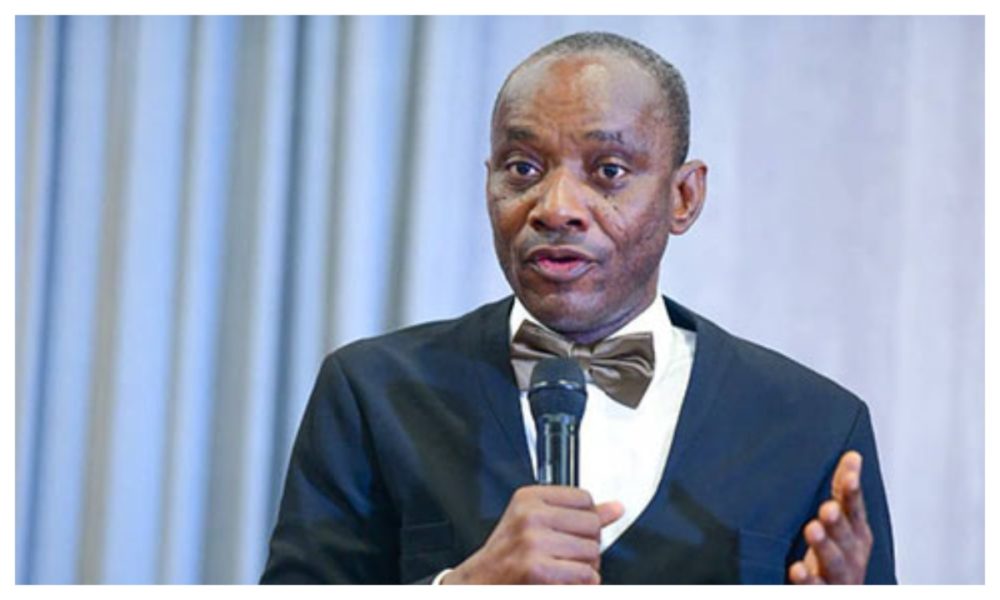
Speaking on Tuesday, the National Coordinator of the Obidient Movement, Dr. Yunusa Tanko, criticised the Senate’s position on the Electoral Act amendment, warning that it could create confusion and undermine the electoral process.
Tanko said the Senate’s approach amounted to “setting the people up,” arguing that lawmakers should either fully support electronic transmission of results or address the infrastructural challenges associated with it, such as poor internet connectivity in some areas.
He faulted claims by some senators that their constituencies lack network coverage, questioning the use of public funds and the level of development brought to such communities by their representatives.
According to Tanko, allowing a return to manual transmission of results where electronic transmission is considered impossible could lead to disputes at polling units and collation centres, as parties may disagree over the existence or absence of network service.
He described the Senate’s position as a “chaotic resolution” that could worsen electoral challenges rather than resolve them, warning that the issue could generate further tension in future elections.
Also speaking, a former National Auditor of the Peoples Democratic Party, PDP, Ray Nnaji, accused the National Assembly of deliberately creating loopholes in the Electoral Act amendment to enable manipulation of the electoral process.
Nnaji said the proposed changes to the law were aimed at weakening transparency, arguing that many lawmakers were aware they would struggle to retain their seats under a fully transparent electoral system.
According to him, public pressure remains critical in determining the outcome of the amendment process, stressing that the views of Nigerians must be reflected in the final law.
He alleged that the timing of the amendment was deliberate, claiming that lawmakers were attempting to push through the changes quickly in order to achieve their desired outcome.
Nnaji warned that resistance from the public could disrupt the electoral timetable if the amendment is rejected, potentially affecting preparations for future elections.
Similarly, the President of the Civil Rights Realisation and Advancement Network, CRRAN, Barr Olu Omotayo, criticised Nigerian politicians over the controversy surrounding the Electoral Act amendment, accusing them of failing to show leadership on electoral reforms.
Omotayo said the debate over electronic transmission of results should not be limited to the period close to elections, noting that genuine reforms ought to have been pursued immediately after the last general election.
According to him, making electronic transmission mandatory requires deliberate investment in infrastructure, particularly telecommunications, which he said has been neglected.
Omotayo accused politicians of pursuing personal interests rather than prioritising the welfare of the electorate, insisting that electoral reforms and infrastructural development should be continuous processes, not last-minute concerns.
He further said the proposed amendment does not represent any significant improvement on the existing law, describing it as a rewording of the old provisions without meaningful change.
According to him, the failure to strengthen the Electoral Act will effectively return the country to the status quo, stressing that accountability and development are often only emphasised during election periods.
On his part, a public affairs analyst and communication expert at Peaceland University, Enugu, Nduka Odo, criticised the Senate’s position, describing it as an endorsement of what he termed “electoral banditry.”
Odo said he was not surprised by the lawmakers’ action, arguing that many senators benefited from loopholes in the electoral process and lacked the incentive to close them.
According to him, the amendment empowers the Independent National Electoral Commission, INEC, to alternate between electronic transmission of results and manual processes, a development he said could undermine electoral credibility.
He alleged that similar loopholes were exploited during the 2023 general elections, when electronic transmission reportedly failed in some areas, leading to discrepancies between results uploaded on the INEC Result Viewing (IReV) portal and those collated manually.
Odo cited Rivers State as an example, claiming that results presented at collation centres differed from those recorded at polling units, yet were admitted due to provisions in the Electoral Act.
He maintained that several lawmakers benefited from such irregularities and questioned their willingness to reform the system.
Describing the Senate’s action as self-serving, Odo called on Nigerians to reject the amendment and pressure lawmakers to revisit it.
UGAMATV further reports that other notable political figures in the country who have also expressed displeasure against the position of the Senate on the matter include Obiageli Ezekwesili (former Minister of Education), veteran Nollywood actor Kenneth Okonkwo, former Vice President Atiku Abubakar, among others.
Meanwhile, Senate President Akpabio said on Tuesday that President Bola Tinubu is expected to sign the amended Electoral Act into law this month.
Akpabio stated this during an emergency plenary session where the lawmakers constituted a committee to harmonise its version of the bill with the one passed by the House of Representatives.
The 12-member committee will work with the House of Representatives to harmonise the versions of the bills passed by both bodies.
“I believe that if you are able to conclude within this — in the next few days or one week— the President should be able to sign this amended Electoral Bill into an Act of Parliament within this month of February,” the Senate president told the lawmakers.
“So I wish you a worthy deliberation with your colleagues,” Akpabio said.